UME UNION / INSPIRATION
Small Patio Layout Ideas: Make Space for One Good Routine
A small patio feels more generous when it does one thing well. Start with the routine you want most, then leave enough space to move through it comfortably.
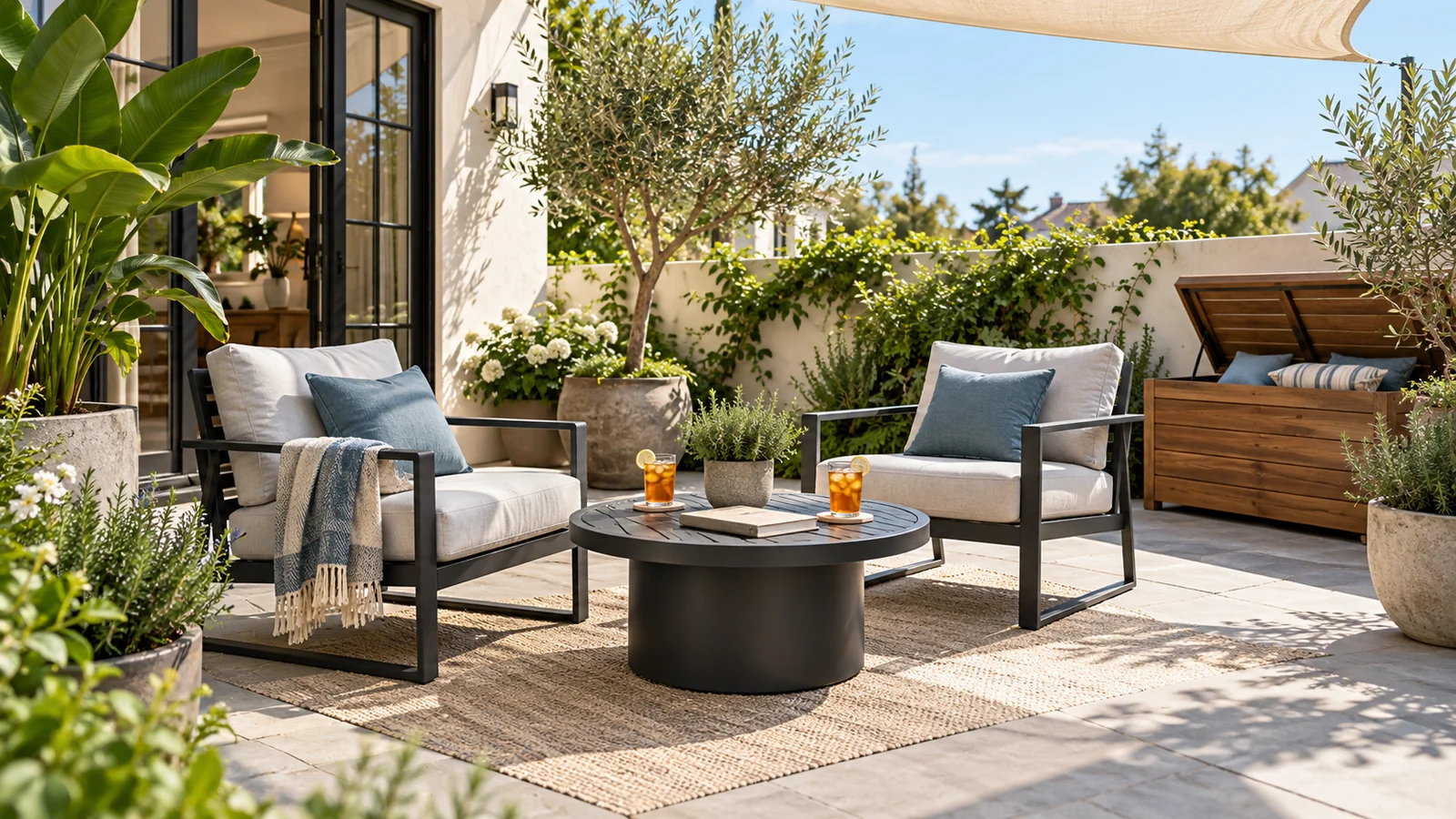 Styling inspiration; check each product listing for exact details.
Pick the main activity
Choose the activity that will happen most often: morning coffee, a meal for two, reading or tending plants. Make that the first furniture decision. A dining setup needs space for chairs in use; a lounge chair needs room for its full footprint. Avoid filling the patio with separate zones that cannot be used comfortably together.
Measure the usable area, not just the boundary. Note door swing, drains, steps and any access that must stay clear. On balconies or elevated areas, confirm applicable load and building requirements before adding heavy furniture, planters or stored materials.
Test the layout with furniture in use
Use removable markers to show the table, chairs and storage. Simulate pulling a chair back and carrying a tray through the door. Check whether a reclining or folding piece needs extra operating space. Storage lids and cabinet doors also need room to open.
For a narrow patio, placing the main seating along one edge may preserve a clear route. The right arrangement depends on your actual measurements and access points. A smaller table can be more useful than a larger one that blocks the only comfortable walkway.
Choose for exposure and upkeep
Read each product’s intended outdoor use and care instructions. Covered outdoor suitability is different from year-round exposure. Check what needs shelter, how cushions should be stored and whether a cover is recommended. Material names alone do not promise resistance to every climate.
Planters need appropriate drainage and a suitable position for the plants you choose. Avoid blocking drains or making a route slippery. If you add shade equipment, follow the stated anchoring, base and wind guidance; decorative photographs do not establish safe installation conditions.
Finish with one useful storage decision
Decide where cushions, small tools and gardening supplies will go when not in use. Check the internal dimensions of any storage unit and whether its contents need additional protection. Do not assume an outdoor storage box is watertight unless the specification says so.
- Choose one main use.
- Keep doors, drains and walking routes accessible.
- Check exposure and care requirements.
- Measure what needs to be stored.
Explore patio furniture, planters and garden storage once the plan has a clear purpose.
CONTINUE WITH THE CATALOG
Compare current listings
Availability and options can change. Confirm the exact specification and delivery choices on the product page.

Outdoor Acacia Wood Square Dining Table – 31.50"L x 31.50"W x 30.00"H – Natural brown

Outdoor Dining Table with Acacia Wood Frame, Teak

DENALI INDUSTRIAL WOOD AND METAL BAR TABLE
