UME UNION / BUYING GUIDE
How to Choose a Storage Cabinet That Fits Your Space
The right cabinet has room for your belongings and room around it. Start with what you need to store, then check the details a product photograph cannot show.
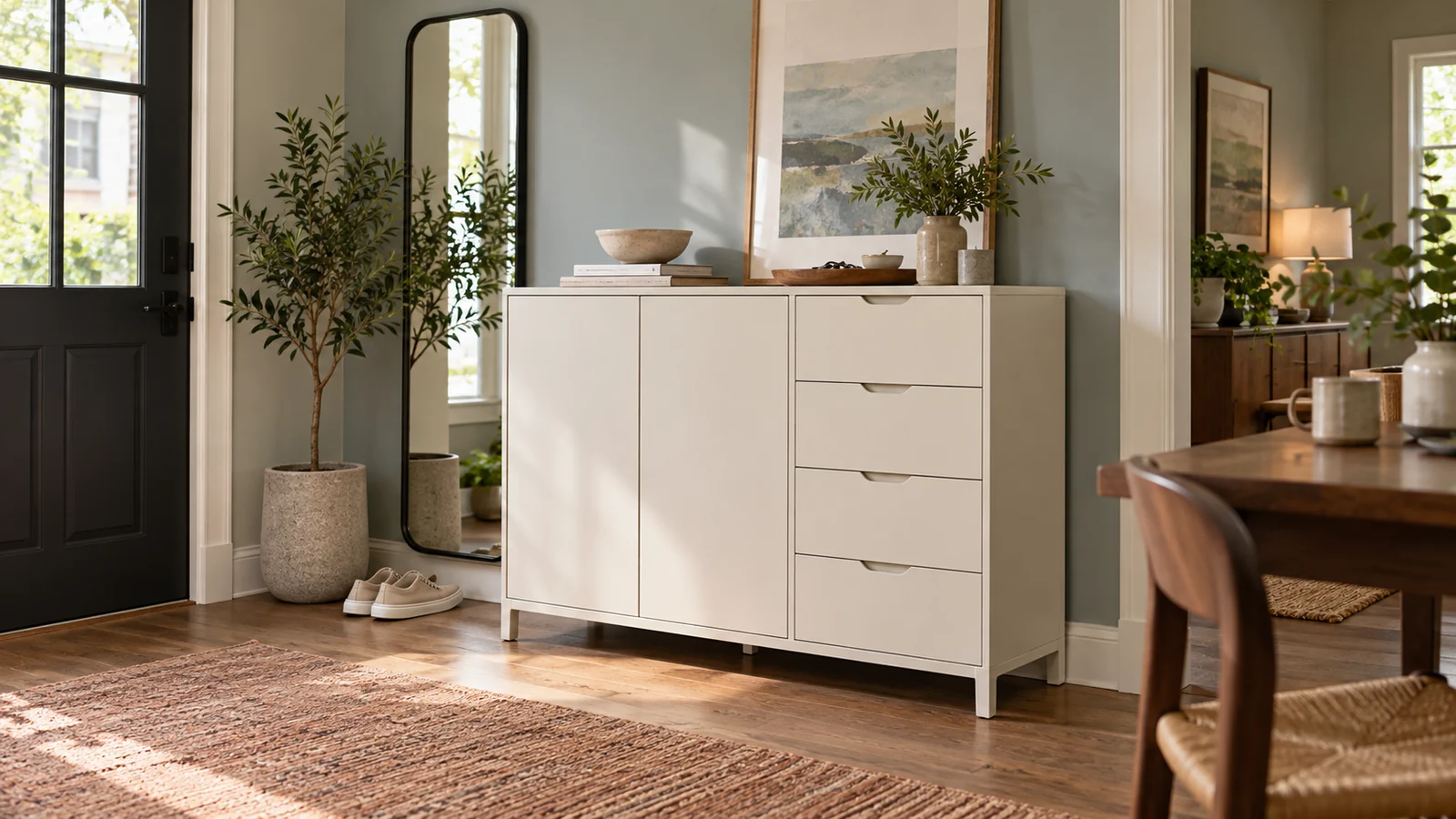 Styling inspiration; check each product listing for exact details.
Start with the objects, not the cabinet
Gather the largest things that will go inside: a serving platter, a stack of towels, a printer or a tall cleaning bottle. Measure their height, width and depth. Add space to lift an item out without tipping it sideways. A cabinet’s overall width includes its sides and frame; it does not tell you whether your widest object will fit on a shelf.
Write down three groups: items used daily, items used occasionally and things that should stay out of sight. Open shelving is convenient for the first group. Closed doors can reduce visual clutter for the others. If an internal dimension is missing, ask for it rather than estimating from the exterior.
Measure the footprint and the opening space
Mark the cabinet footprint on the floor with removable tape. Include handles, the baseboard and any gap needed behind the unit. Then open nearby doors and walk the route you normally use. For a hypothetical 16-inch-deep cabinet, a 16-inch taped rectangle checks only the closed footprint; doors and drawers need additional operating space.
Measure the delivery route too: entrance width, hallway turns, stairs and the final room door. Compare these with the listed package dimensions, not just the assembled size. A flat-pack unit may enter a room easily but still require enough floor area for assembly.
Check shelves, hardware and placement
Adjustable shelves can accommodate changing storage needs, but check the number of positions and any stated load limit. A whole-cabinet capacity is different from a per-shelf capacity. Heavy objects belong low down, within the manufacturer’s limits. Check whether drawers have stops and whether the listing identifies the hinge or slide type.
For tall furniture, follow the manufacturer’s anchoring instructions and use fixings suitable for the wall. Do not assume mounting hardware suits every wall surface. Wood-based panels, metal and solid wood have different care requirements; compare the actual construction rather than choosing from the finish name alone.
A final checklist before ordering
- Confirm exterior and usable interior dimensions.
- Check door swing, drawer travel and the delivery route.
- Read shelf capacities, assembly requirements and anchoring instructions.
- Review package count and the delivery or pickup choices shown for this item.
- Keep the item code with any question sent to the seller.
Browse storage cabinets with this list beside you. A slightly smaller cabinet that opens comfortably is often more practical than one that fills every inch of wall.
CONTINUE WITH THE CATALOG
Compare current listings
Availability and options can change. Confirm the exact specification and delivery choices on the product page.

Gray Metal Lockers, Cleaning Tool Cabinets With Locking Doors, High Broom Tool Storage Cabinets, Adjustable Shelves, Large Cabinets For Kitchens, Offices, Shops.(72 Inches)

Broom Storage Cabinet With Locking Doors And Shelves, 65" H Metal Storage Cabinet With Hanging Rod & S-Hooks, Cleaning Tool Storage Cabinet Grey

Tilt Out Trash Can Cabinet, Hidden Wooden Trash Can Cabinet with Drawer, Free Standing Garbage Cabinet for Kitchen, 10 Gallon Farmhouse Laundry Hamper Cabinet for Kitchen, Living Room (White)
