UME UNION / INSPIRATION
Small Entryway Storage Ideas for a Clearer Arrival
An entrance works hardest when people come home at the same time. Build the layout around that everyday moment, then add the details that make it feel welcoming.
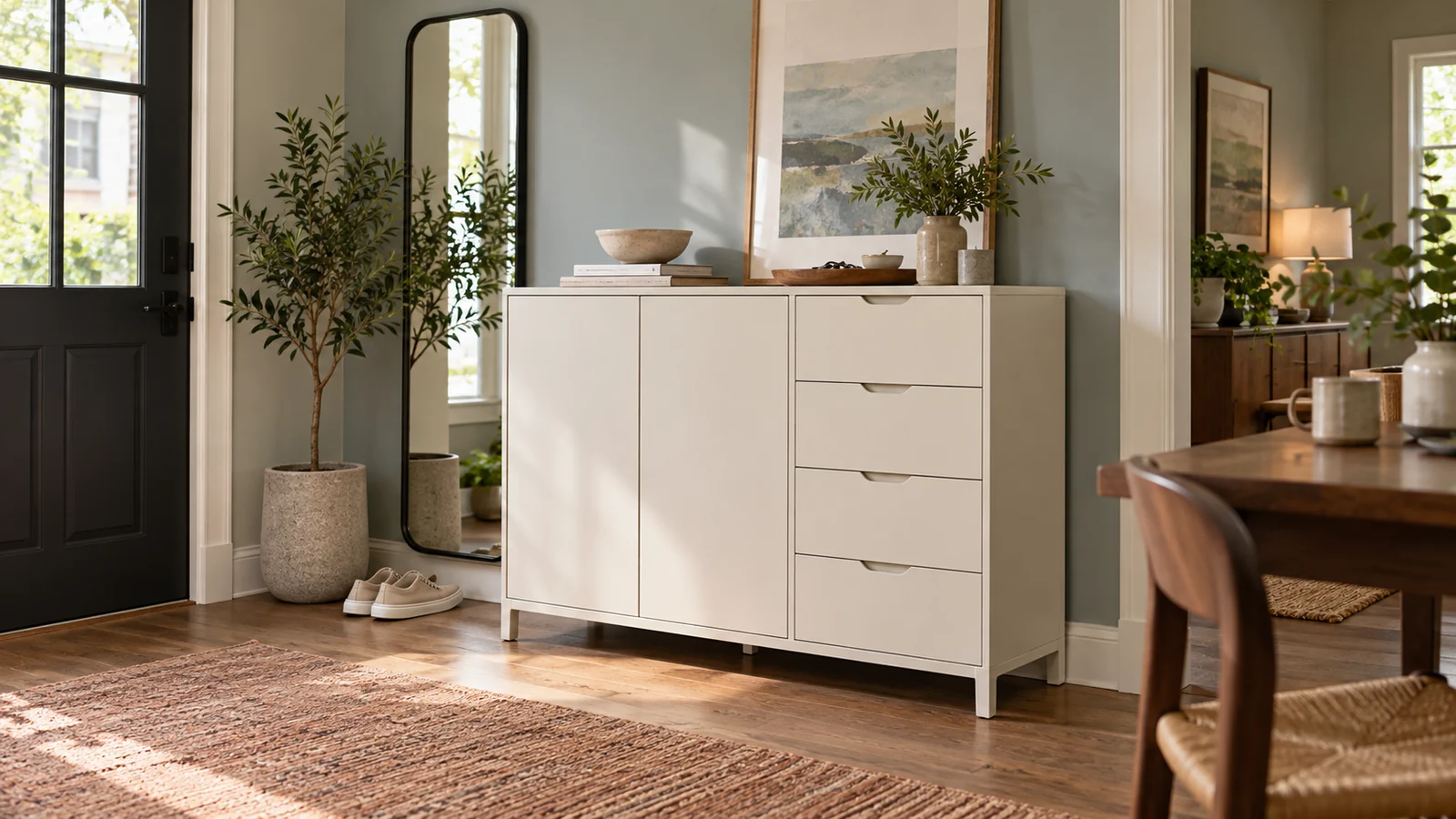 Styling inspiration; check each product listing for exact details.
Map the arrival routine
List what lands by the door: shoes, a bag, keys, incoming mail and perhaps pet supplies. Choose a home for each before adding furniture. Keep everyday items accessible and move occasional things elsewhere. A small entrance rarely needs to store the entire household’s wardrobe.
Watch which direction the door opens and where people stand while taking off shoes. Mark a clear route through the space. Storage that works only with its doors shut can still obstruct the entrance during a busy arrival. Test the opening space with tape before ordering.
Give the narrowest wall one clear job
A shallow cabinet can hide footwear; a console can hold a small landing tray. Choose the job that solves the bigger problem instead of squeezing both into the same strip of wall. Check usable dimensions: a slim exterior can limit shoe sizes or leave little room for a bag.
If a seat would help, use a bench designed for sitting and check its capacity. Do not turn an ordinary cabinet into a seat. Tall or narrow furniture may need anchoring according to its instructions, even when it seems stable in the photograph.
Use a calm, limited set of finishes
Choose one dominant furniture finish and repeat a small accent, such as dark handles or a natural-texture basket. Closed storage reduces the number of visible objects. Leave part of the top empty so keys have a useful landing place rather than competing with decorations.
A mirror can help with a final check before leaving, but it needs a suitable mounting position. Check its dimensions and mounting instructions. Keep lighting controls reachable and avoid placing decor where it can catch a bag or reduce the doorway’s usable width.
Try the plan for a normal week
Before buying extra storage, use a temporary tray and designate a small number of daily shoes. See which items still end up on the floor. This tells you whether the problem is capacity, an awkward opening or simply a missing place for one category of belongings.
- Measure the floor area and the open-door route.
- Choose one main storage job.
- Keep a small, obvious landing spot.
- Move seasonal overflow to another room.
Start with entryway storage, then compare the interior layout with your actual routine.
CONTINUE WITH THE CATALOG
Compare current listings
Availability and options can change. Confirm the exact specification and delivery choices on the product page.

Gray Metal Lockers, Cleaning Tool Cabinets With Locking Doors, High Broom Tool Storage Cabinets, Adjustable Shelves, Large Cabinets For Kitchens, Offices, Shops.(72 Inches)

Broom Storage Cabinet With Locking Doors And Shelves, 65" H Metal Storage Cabinet With Hanging Rod & S-Hooks, Cleaning Tool Storage Cabinet Grey

Tilt Out Trash Can Cabinet, Hidden Wooden Trash Can Cabinet with Drawer, Free Standing Garbage Cabinet for Kitchen, 10 Gallon Farmhouse Laundry Hamper Cabinet for Kitchen, Living Room (White)
