UME UNION / BUYING GUIDE
Ceiling Light Color Temperature: Choose Light for the Room
A ceiling light needs to suit both the activity and the atmosphere. Color temperature, brightness and controls answer different questions; check each separately.
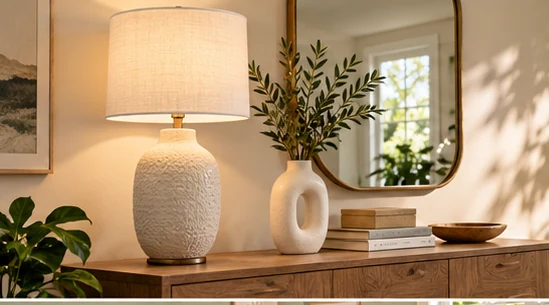 Styling inspiration; check each product listing for exact details.
Separate color temperature from brightness
Kelvin describes the appearance of white light. Lower listed values generally look warmer; higher values look cooler. Lumens describe light output. A cooler-looking fixture is not necessarily brighter than a warmer one, and wattage alone is not a dependable brightness comparison across different products.
A listing might offer 3000K, 4500K and 6000K settings. Those are examples of selectable color temperatures, not three brightness levels. Check whether the chosen fixture has fixed or selectable settings and how the selection is made. Product photos and your screen can alter the apparent color.
Plan around what happens in the room
For a living or sleeping area, consider how the ceiling light works with bedside or reading lamps. In a workspace, consider task visibility and glare at the desk. The goal is a usable combination of light sources rather than expecting one fixture to solve every activity.
Compare lumen output, room dimensions, ceiling height and light distribution. A shade or diffuser changes how the room receives the light. If glare, accessibility or a detailed lighting calculation is important, ask a lighting professional rather than treating a generic room-size claim as a complete design.
Check controls and installation compatibility
“Dimmable” does not mean compatible with every wall dimmer. Confirm the supported control type, any required dimmer model and whether a remote is included. An integrated LED fixture may have no replaceable bulb; check service and replacement information rather than assuming standard bulbs fit.
Review voltage, mounting dimensions and suitability for the installation location. A ceiling fan with a light also needs checks for support, clearances and controls. Use a qualified electrician where required. This guide helps compare listings; it does not replace installation instructions or electrical requirements.
Use this comparison list
- Color temperature: fixed, selectable or adjustable?
- Brightness: stated lumens and control range?
- Controls: compatible wall switch, dimmer or remote?
- Physical fit: dimensions, mounting and ceiling conditions?
- Location: explicitly suitable for the intended room?
Explore lighting and decor and read the exact fixture specification. If the control method or light output is missing, ask before buying. A compatible, well-placed light is more useful than an impressive-looking fixture that cannot work with your setup.
CONTINUE WITH THE CATALOG
Compare current listings
Availability and options can change. Confirm the exact specification and delivery choices on the product page.

Artificial Areca Palm Plant, 5.2ft Tall Faux Tropical Dypsis Lutescens Tree in Pot for Indoor or Outdoor Home, Office, or Garden Decoration, 2pcs/set

Artificial Bird of Paradise Plant, 5.2ft Tall Faux Tropical Palm Tree in Pot for Indoor or Outdoor Home, Office, or Garden Decoration, 2pcs/set

FIREPLACE SCREEN
