UME UNION / INSPIRATION
Small Home Office Layout Ideas That Leave Room to Live
A useful home office starts with the work you do, not the largest desk you can fit. Separate the desk footprint from the space needed to sit, move and store equipment.
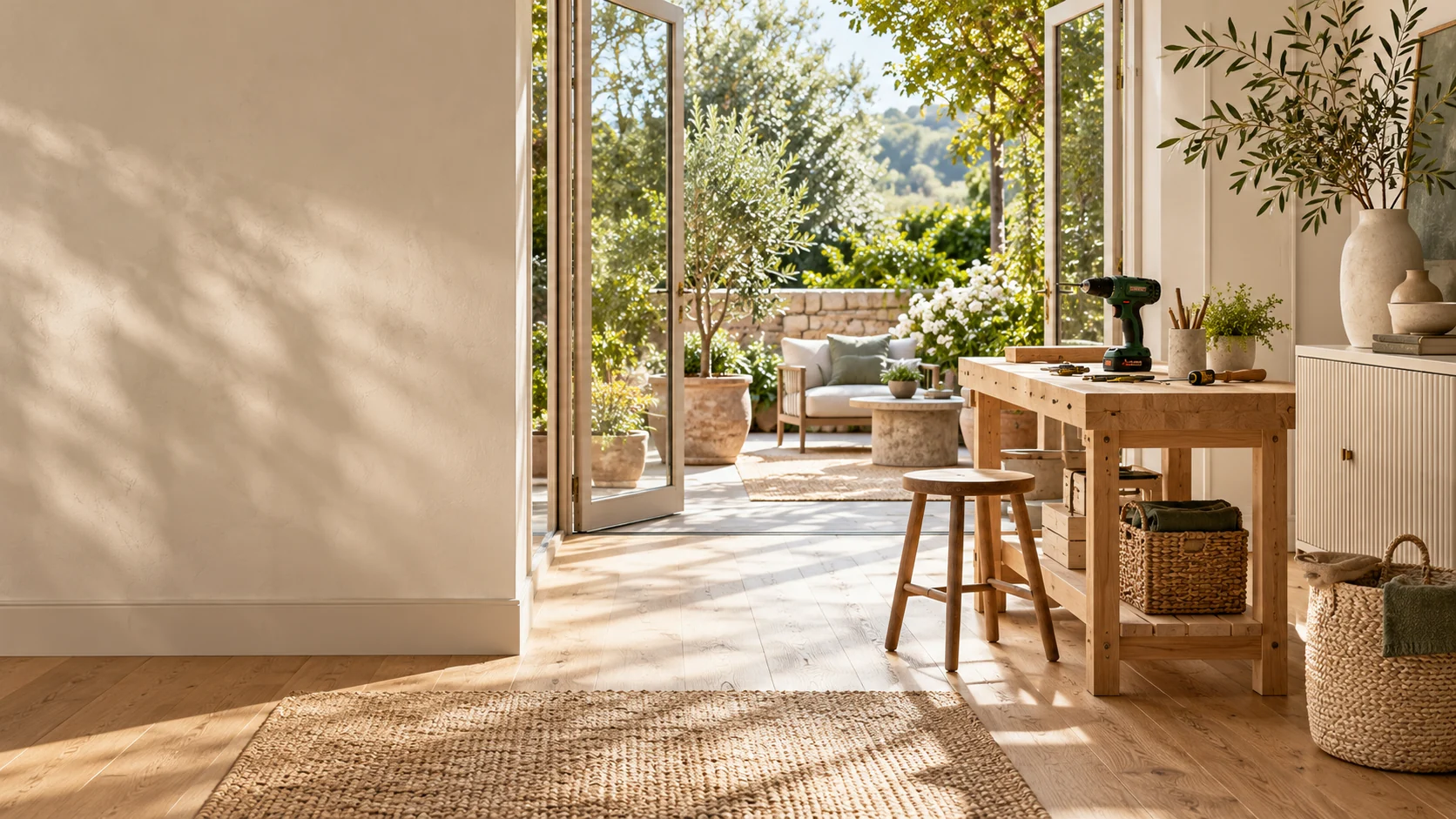 Styling inspiration; check each product listing for exact details.
Choose the task before the desk shape
Measure the equipment that must stay on the work surface: monitor, keyboard, laptop, paperwork or a drawing pad. A compact laptop station has different depth needs from a setup with a separate monitor. Check the usable surface, especially when a raised shelf or built-in organizer takes away part of the desktop.
Think about whether the desk is used all day or briefly. Allow a comfortable working arrangement that suits you, with equipment positioned appropriately. Furniture dimensions alone cannot guarantee ergonomic suitability; adjustable equipment and individual needs still matter.
Draw the chair movement, not just the furniture
Tape out the desk footprint and sit in the intended chair position. Test pulling back, standing up and walking behind it. Check nearby drawers, room doors and wardrobe doors. A desk that fits wall to wall may leave no useful route once someone is seated.
Look at the window from the seated position. Reflections on a screen may be easier to manage with a different desk orientation or adjustable shading. Plan task lighting without trailing a cable across a walking route. Verify outlet locations before deciding that a corner works.
Store by how often you reach for things
Keep frequently used supplies within convenient reach and move reference material to a separate shelf. Closed storage can help a desk corner recede visually in a living room. Open shelving works well when the contents are limited and the shelf depth suits them.
Check shelf load limits for books and equipment. Keep heavy items low and follow anchoring instructions. Allow ventilation around electronics as directed by their manufacturers; a cabinet that physically fits a printer may still be unsuitable if the equipment needs more operating clearance.
Make the corner feel part of the home
Repeat a finish or color already present in the room instead of introducing a completely separate furniture language. Use one task light and a small number of decorative objects. Keep the work surface easy to clear at the end of the day if the room has another purpose.
- List essential equipment and measure it.
- Test chair movement and access routes.
- Plan power, light and screen position.
- Choose storage for the actual contents.
Compare home office furniture and shelving against the completed sketch.
CONTINUE WITH THE CATALOG
Compare current listings
Availability and options can change. Confirm the exact specification and delivery choices on the product page.

Solid Wood Folding Desk, 49'' Mid Century Modern Computer Desk, Simple Foldable Desk with Cable Groove, Space- Saving, Wooden Study Writing Desk for Home Office, Bedroom, Small Spaces, Walnut

4-Tier Wooden Open Bookcase,Modern Acacia Wood Display Bookshelf,Ebonized finish

Rustic White Farmhouse 3-Drawer File Cabinet with Wheels – Vertical Rolling Storage for Letter/A4, Printer Stand & Mobile Organizer for Home Office
