UME UNION / BUYING GUIDE
Shoe Cabinet Size Guide: Check Depth, Capacity and Clearance
A slim shoe cabinet can tidy a hallway, but a compact exterior does not guarantee that every shoe will fit. Match the inside of the cabinet to the footwear you actually wear.
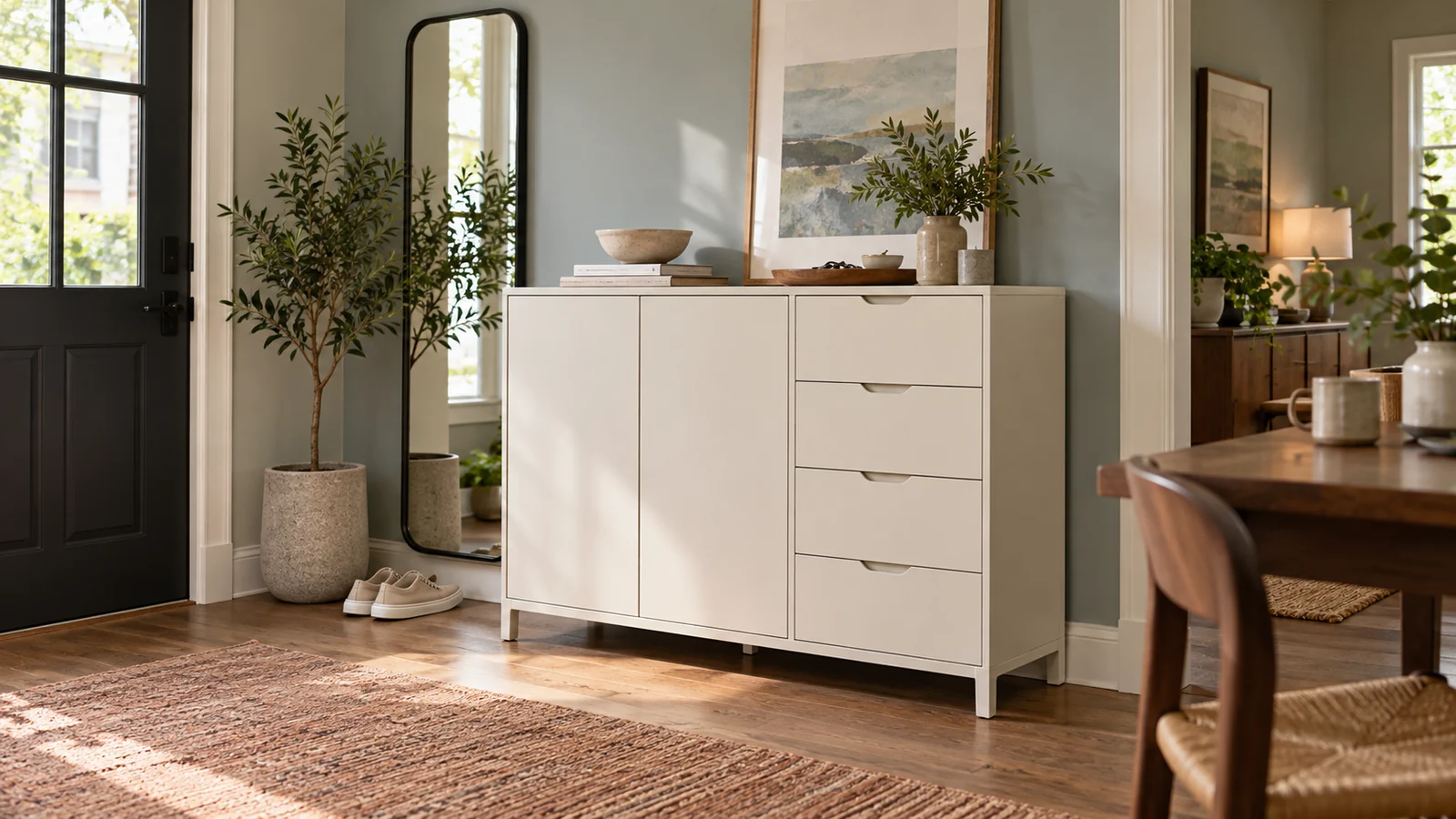 Styling inspiration; check each product listing for exact details.
Measure your largest everyday pair
Measure a shoe from heel to toe and across its widest point. Repeat for bulky sneakers, work shoes or ankle boots rather than using your smallest pair as the reference. Internal shelf depth needs to accommodate the actual shoe and leave enough room for removal. For boots, usable compartment height can be more important than the total pair count.
If two people share the cabinet, check both sets of footwear. Manufacturer capacity estimates may use a particular shoe size or arrangement. Treat an unqualified “holds 20 pairs” claim as a starting point for questions, not a guarantee for your household.
Understand tilt-out and shelf designs
Tilt-out fronts store shoes at an angle, so exterior depth alone does not show the maximum shoe length. Look for a stated compatible size or a diagram of the compartment. Check whether dividers are removable and whether removing one reduces the claimed capacity.
Traditional shelves make it easier to see the arrangement, but fixed shelves can restrict taller footwear. Adjustable shelves allow some flexibility; confirm how many can move. Neither style should be assumed suitable for wet shoes. Follow the stated care instructions and allow footwear to dry before putting it into enclosed storage.
Allow space for people and doors
Tape the footprint on the floor and test the cabinet with your front door fully open. Check the handle and any baseboard offset. A tilt-out panel needs room in front of it, while hinged doors may reach into the walking route. Consider where someone will stand while opening the cabinet.
If you also need a seat, choose a product specifically designed and rated for sitting. A storage cabinet top is not automatically a bench. Follow anchoring guidance, especially for narrow or tall units, and keep the exit route clear.
Build a realistic capacity plan
Count the shoes you want stored here rather than every pair you own. Keep everyday pairs nearest the door and use another location for seasonal footwear. This may let you choose a narrower unit without creating overflow on the floor.
- Check usable depth and maximum shoe size.
- Allow taller compartments for boots or high-top shoes.
- Verify opening clearance and anchoring requirements.
- Compare the actual compartment layout with your pair count.
Explore entryway storage once you know the size and opening style that suit your hallway.
CONTINUE WITH THE CATALOG
Compare current listings
Availability and options can change. Confirm the exact specification and delivery choices on the product page.

Gray Metal Lockers, Cleaning Tool Cabinets With Locking Doors, High Broom Tool Storage Cabinets, Adjustable Shelves, Large Cabinets For Kitchens, Offices, Shops.(72 Inches)

Broom Storage Cabinet With Locking Doors And Shelves, 65" H Metal Storage Cabinet With Hanging Rod & S-Hooks, Cleaning Tool Storage Cabinet Grey

Tilt Out Trash Can Cabinet, Hidden Wooden Trash Can Cabinet with Drawer, Free Standing Garbage Cabinet for Kitchen, 10 Gallon Farmhouse Laundry Hamper Cabinet for Kitchen, Living Room (White)
